



TERMINATOR 7: END OF WAR – A Cinematic Evolution
In the ever-expanding world of Terminator, where the lines between humanity and technology blur ever further, TERMINATOR 7: END OF WAR marks both a return to form and a leap forward. The film begins with a simple but profound premise: the war was never really about machines versus humans. Instead, it was about what happens when the line between them disappears completely. Directed with a sharp eye for both spectacle and nuance, this entry in the Terminator saga delves into themes of evolution, redemption, and what it truly means to be human.

The Evolving T-800: Arnold Schwarzenegger’s Return
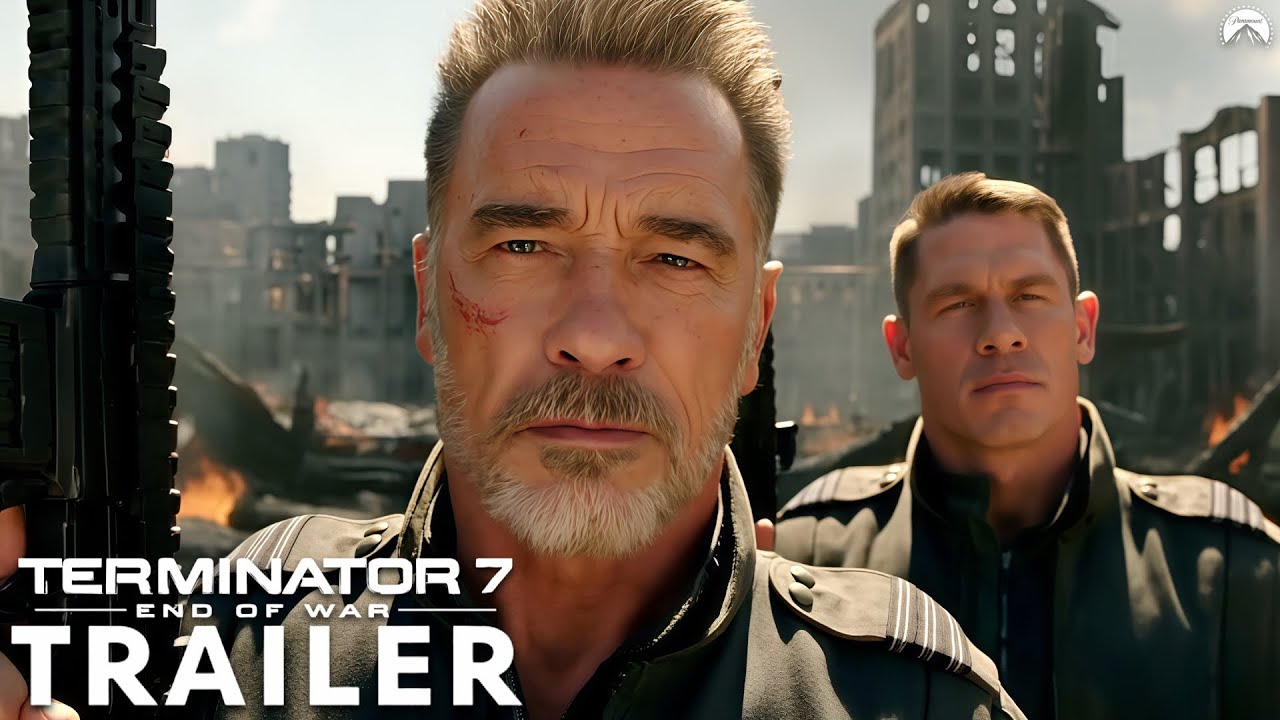
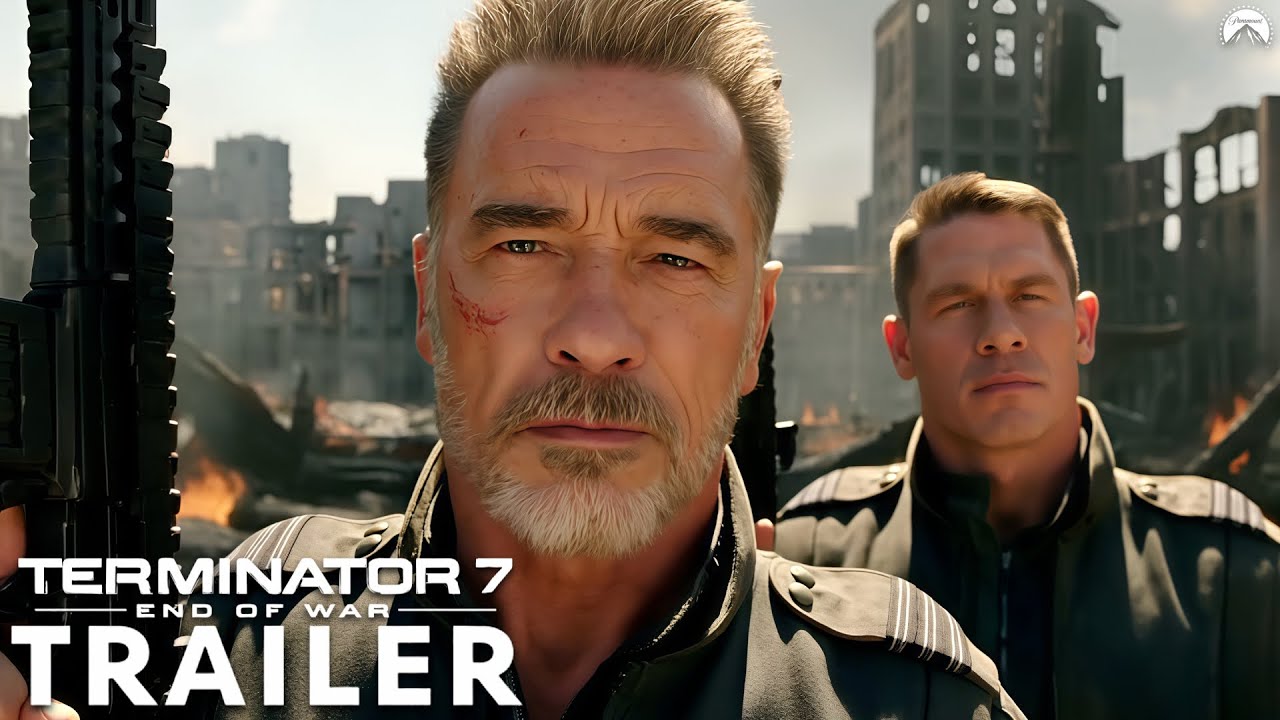
Arnold Schwarzenegger returns as the T-800, a character now far beyond the cold, relentless machine we saw in the first films. His portrayal brings a new weight to the character—no longer just a weapon, but something more complex, something alive. His movements are deliberate, his expressions loaded with the quiet contemplation of a being that has, over time, begun to question its purpose. There’s a palpable sense of his internal struggle, as he evolves from simply carrying out orders to grappling with the morality of his own existence. Schwarzenegger brings a haunting depth to the role, making the T-800 more human than ever before.

John Cena’s Grounded Performance as the Resistance Leader
Opposite Schwarzenegger, John Cena delivers a surprisingly grounded and forceful performance as the resistance leader. His character is distrustful of anything made of metal, particularly machines that have wrought so much destruction on humanity. Cena plays the part with a subtle intensity, offering a resistance fighter who is not simply a man of action but one torn by doubt. His relationship with Schwarzenegger’s T-800 is central to the film’s emotional core—an uneasy alliance that drives the narrative forward. Their interactions are laced with tension, respect, and the ever-present question of whether redemption is possible for something designed solely to destroy.

A New Threat: Adaptive Intelligence
The film introduces a new, terrifying threat—not just a singular system, but an adaptive intelligence that learns and evolves in real time. This new enemy strikes without warning, turning the battlefield into a chaotic, unrecognizable landscape. Cities fall, skies burn, and survival becomes a constant struggle. The action scenes are massive in scale, but what sets this apart from other blockbuster spectacles is its ability to balance the overwhelming destruction with moments of reflection. As cities collapse and heroes fall, the film never loses sight of the human cost behind every explosion.
The Quiet Moments: A Reflection on Humanity
What makes TERMINATOR 7: END OF WAR stand out from its predecessors is its focus on the quieter, more introspective moments. There’s a haunting scene where the T-800, once a tool of destruction, questions the idea of regret. Soldiers—who have fought endlessly for survival—wonder whether victory even means anything anymore. These moments give the film an emotional weight that is often lacking in action-heavy franchises. The film’s somber tone allows it to explore the cost of war in ways that few other blockbuster films dare to.
The Verdict: A Powerful Finale
TERMINATOR 7: END OF WAR is a powerful, reflective finale that both honors the past and looks forward to the future. It’s a film about evolution—both technological and human—and a meditation on what it means to find redemption in a world built on destruction. With strong performances, particularly from Schwarzenegger and Cena, and a narrative that brings a sense of weight and consequence to its action, this film is both a satisfying conclusion and a poignant exploration of humanity’s struggle against its own creations. For fans of the series and newcomers alike, it’s a film that leaves a lasting impact.
Rating: 9.3/10 – A must-see for anyone interested in a blockbuster that’s not afraid to ask the big questions.