




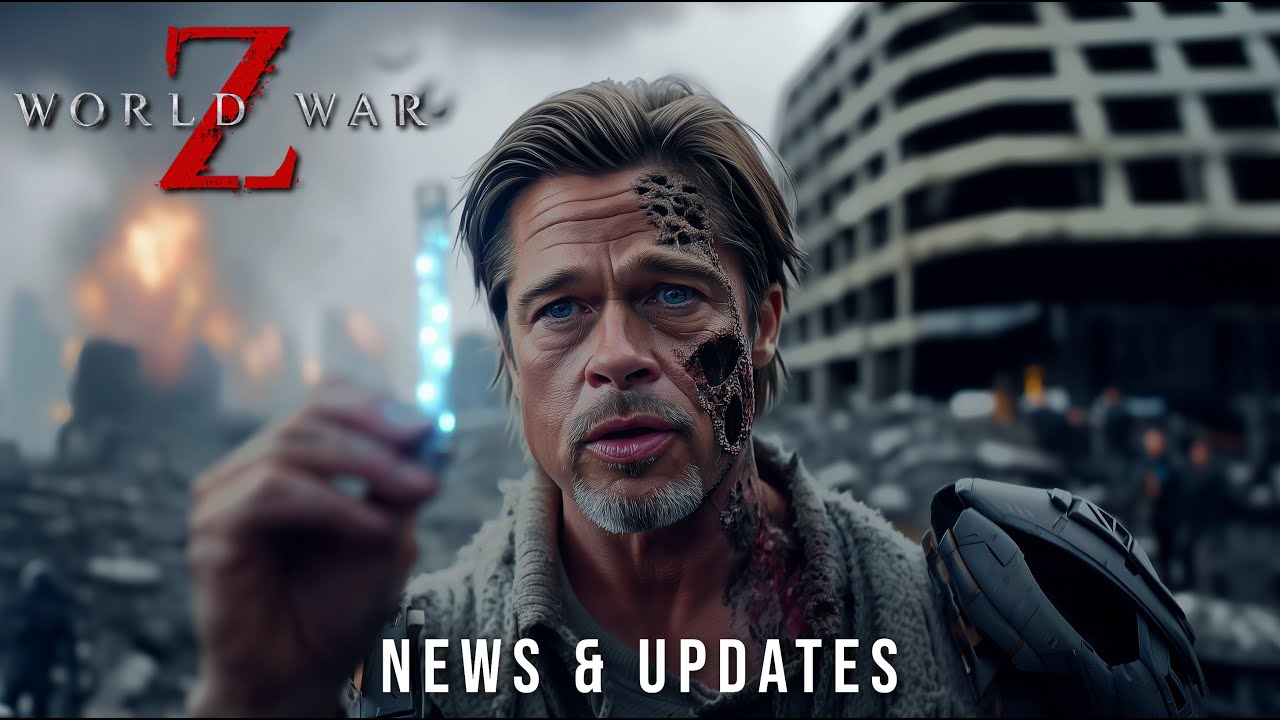
An Apocalypse That Refuses to Stay Dead
There is a particular dread that lingers after World War Z 2, a sense that the film is less interested in jump scares than in the slow, terrifying realization that humanity may already be obsolete. Directed by David Fincher, this long-anticipated sequel does not merely resurrect the zombie genre; it interrogates it. The result is a film that feels sharper, colder, and far more unsettling than its predecessor.

Brad Pitt returns as Gerry Lane, older, wearier, and carrying the quiet trauma of a man who has already watched the world collapse once. Years after the apparent containment of the virus, a grim discovery reveals the truth: the infection did not die. It learned. What follows is not a frantic race to stop the end of the world, but a sobering meditation on adaptation, evolution, and the moral cost of survival.

Fincher’s Vision: Precision Over Panic
Fincher approaches global catastrophe with the same meticulous control he brings to psychological thrillers. The camera lingers where other zombie films would cut away, forcing us to absorb the horror rather than flee from it. Abandoned cities are not just empty; they are eerily orderly, as if nature itself is waiting to reclaim the ruins.

This restraint pays dividends. When chaos finally erupts, it feels earned. The evolved infected move with chilling coordination, no longer a mindless swarm but a calculating force. Fincher transforms the familiar image of the zombie horde into something closer to a dark mirror of human intelligence.
A Smarter, Scarier Threat
- The infected display tactical awareness, adapting to environments and obstacles.
- Action sequences emphasize tension and dread rather than spectacle alone.
- Violence is purposeful, often serving character and theme instead of shock value.
Performances Grounded in Fear and Fatigue
Pitt delivers one of his most understated performances in years. Gerry Lane is no longer the resourceful everyman hero; he is a survivor who understands that every solution creates a new problem. Pitt plays him with a haunted calm that anchors the film’s emotional weight.
Jessica Chastain’s Dr. Evelyn Shaw provides the film’s most provocative ideas. Her belief that the virus may represent a brutal form of human evolution introduces an ethical dilemma that lingers long after the credits roll. Chastain balances clinical intelligence with moral ambiguity, making her character both compelling and deeply unsettling.
John Boyega brings raw intensity as Captain Mason Ward, a soldier leading a fractured resistance in Africa. His performance captures the exhaustion of endless conflict, while Rinko Kikuchi’s return as Segen reinforces the film’s global perspective, reminding us that this apocalypse spares no corner of the world.
Global Scale, Intimate Horror
One of the film’s greatest strengths is its sense of scale. From frozen tundras to burning deserts and submerged cities, World War Z 2 feels genuinely worldwide. Yet Fincher never lets the spectacle overwhelm the human story. The most frightening moments often occur in confined spaces: tunnels, laboratories, makeshift shelters where silence becomes the loudest sound.
The action is relentless but never empty. Each set piece advances the narrative or deepens our understanding of the threat. This is blockbuster filmmaking with discipline, a rarity in modern franchise cinema.
Themes That Cut Uncomfortably Close
At its core, the film asks an unsettling question: what if survival itself is a curse? The idea that humanity’s greatest strength, adaptability, might also be its undoing gives the film a philosophical edge. Fincher and his writers are less interested in curing the world than in examining whether it deserves saving in its current form.
These themes elevate World War Z 2 beyond genre entertainment. It becomes a reflection on pandemics, militarization, and the ethical compromises societies make when fear becomes policy.
Final Verdict
World War Z 2 is not just a sequel; it is a reinvention. David Fincher crafts a film that is intense, intelligent, and quietly devastating. It respects the intelligence of its audience and challenges the conventions of zombie cinema with confidence and clarity.
With haunting imagery, disciplined direction, and performances that resonate, this is a rare blockbuster that leaves you unsettled for the right reasons. Survival, the film suggests, is not about winning. It is about what remains when the world refuses to end.
Rating: 9.7/10